5-Card Draw: Rules, Hand Rankings & Basic Strategy
Five-card draw is the poker most people learn first at a kitchen table: five cards, one chance to swap, best hand wins. The rules take two minutes; playing the draw correctly is where nearly everyone goes wrong. Here are both.
The rules in five steps
- Ante or blinds. Home games usually ante; online games use small/big blinds like Hold’em.
- The deal. Each player receives five cards face down.
- First betting round. Starting left of the big blind (or dealer, in ante games), players fold, call, or raise.
- The draw. Each remaining player may discard 0–5 cards and receive replacements. “Standing pat” (drawing zero) usually announces a made hand — or a bluff.
- Second betting round and showdown. One more round of betting; best five-card hand per the standard rankings takes the pot.
That’s the whole game. No community cards, no exposed cards — which makes the draw itself your main source of information.
Details that decide arguments
- Where the action starts changes after the draw. Pre-draw, the first bettor is left of the big blind. Post-draw, action begins with the first live player left of the button. In ante games both rounds start left of the dealer.
- The deck can run out. Six players holding five cards each already uses 30 of 52. If everybody drew five, you would need 60 cards. That is why most rooms cap the draw at four (or three, with a fifth card allowed only if you show an ace or a wild card) and why the dealer reshuffles the discards — minus the current burn card — when the stub runs low.
- Discards are dead the moment they leave your hand. You cannot take a card back after releasing it, even if the dealer has not yet dealt your replacements. Announce the number, then release.
- Jacks or better to open is the classic ante variant: you need at least a pair of jacks to make the first bet. It exists to stop everyone limping with nothing and killing the ante. If nobody opens, the antes stay and a new hand is dealt.
Hand rankings and how often they appear
Draw poker uses the plain five-card rankings with no community cards and no kicker games, so the raw probabilities apply directly to your dealt hand.
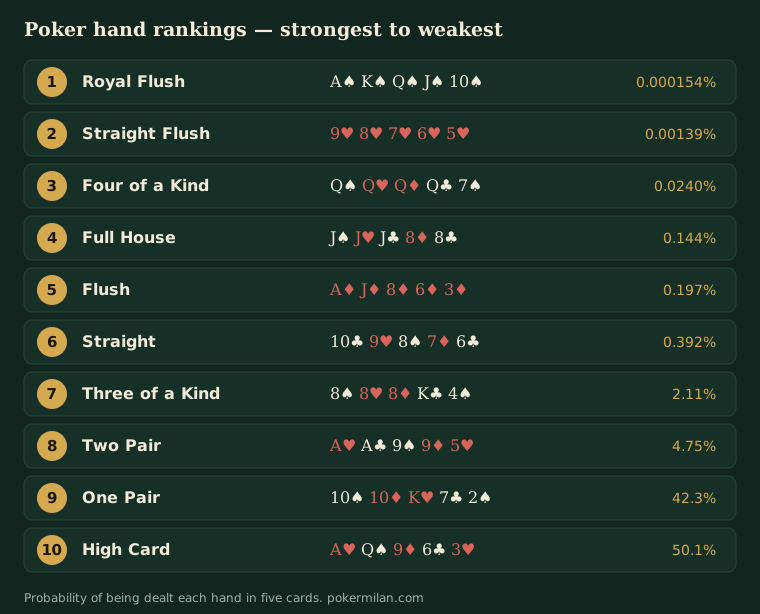
There are 2,598,960 distinct five-card hands. Of those, 50.1% are high card, 42.3% are one pair, 4.75% are two pair, 2.11% are three of a kind, 0.392% are a straight, 0.197% a flush and 0.144% a full house.
Read that list again, because it sets the whole strategy: you will be dealt a pair or worse roughly 92% of the time. Two pair — a hand that feels unremarkable — is already better than 92% of random deals. That is why draw is a game of small edges played often, not a game of monsters. Full hand probability tables are worth memorising before you memorise anything else.
What to keep: the discard table
This table alone will beat most casual tables:
| You hold | Keep | Draw |
|---|---|---|
| One pair | The pair only | 3 cards |
| Two pair | Both pairs | 1 card |
| Three of a kind | The trips | 2 cards |
| Four to a flush or open-ended straight | The four | 1 card |
| Straight, flush, full house or better | Everything — stand pat | 0 |
| Nothing (no pair, no 4-card draw) | Fold to a bet; if free, keep the highest 1–2 cards | 3–4 |
The most common amateur mistake is keeping a kicker with a pair (“pair of kings, keep the ace”). Drawing three to a bare pair improves it about 28.7% of the time; keeping a kicker drops your improvement odds noticeably in exchange for very little disguise. Draw the three.
Improvement odds worth knowing
- Pair, draw 3: improve to two pair or better ~28.7%
- Two pair, draw 1: fill the full house ~8.5% (4 outs in 47)
- Trips, draw 2: improve to full house or quads ~10.4%
- Four-flush, draw 1: hit the flush ~19.1% (9 outs)
- Open-ended straight, draw 1: ~17% (8 outs)
- Inside straight, draw 1: ~8.5% — this is why “never draw to an inside straight” became a proverb. The pot must offer better than 10-to-1 to justify it.
Worked example: where 28.7% comes from
You hold K♠ K♥ 9♦ 6♣ 2♠ and throw the 9, 6 and 2. Forty-seven cards are unseen and there are 16,215 ways to draw three of them. Count the good ones:
| Result | Combinations | Chance |
|---|---|---|
| Two pair | 2,592 | 16.0% |
| Three of a kind | 1,854 | 11.4% |
| Full house | 165 | 1.0% |
| Four of a kind | 45 | 0.3% |
| Any improvement | 4,656 | 28.7% |
Now keep the ace kicker instead and draw two. You give up every combination that needed a third card to pair, and improvement falls to roughly 26%. You paid about three percentage points of equity to hide one card from a player who was not counting your discards anyway. That is the definition of a bad trade, and it lands on most lists of common poker mistakes.
Worked example: is the inside straight ever right?
You hold 9♠ 8♠ 7♥ 5♦ 2♣ and there is 400 in the pot after your opponent bets 50. You keep 9-8-7-5 and need a six: 4 outs in 47 = 8.5%, or about 10.8-to-1 against. The pot is laying you 450-to-50, which is 9-to-1. Nine is less than 10.8, so the call loses money — fold, or draw three to the 9-8 and treat it as a different hand entirely.
Change one number and the answer flips. If the pot held 700 and the bet were still 50, you would be getting 15-to-1 and the gutshot becomes a clear call. The draw did not change; the price did. That is the entire lesson of pot odds, and you can check any of these numbers yourself with the odds calculator.
Reading the draw
Because there are no exposed cards, the number of cards an opponent takes is your best tell:
- Takes 3: one pair, almost always.
- Takes 1: two pair, a flush/straight draw, or trips disguising themselves. If they bet hard after drawing one, respect the made flush more than two pair.
- Takes 2: usually trips; sometimes a pair plus kicker (a mistake, but a common one).
- Stands pat then bets big: made straight or better — or a stone bluff. Against most home-game players, pat + big bet is exactly what it looks like.
The follow-up question matters more than the draw itself: did they bet after drawing, or check? A player who draws one and then checks has almost always missed a straight or flush, because two pair that filled up would bet. That check is your cue to bet a modest hand for value, and it is one of the cleanest bluffing spots in the game — you are attacking a range that is mostly air and knows it.
Basic winning strategy
- Enter pots with a pair of jacks or better, a good four-card draw, or trips. Junk hands with a plan to “see what happens” lose money before the draw even arrives.
- Raise your big pairs before the draw (aces, kings). Thinning the field protects a hand that usually won’t improve.
- Respect pat hands and one-card draws that bet into you unless you beat two pair.
- Bluff standing pat sparingly but deliberately — it’s the game’s most powerful move precisely because most players never do it.
Position does the heavy lifting
Drawing last is worth more than most players realise. If three opponents draw three cards each before it is your turn, you know you are up against three bare pairs and a modest hand plays like a strong one. Draw first and you are guessing. Tighten your opening range from early seats by a full tier — jacks becomes queens — and widen it on the button.
Common mistakes and the fix
| Mistake | Why it costs | Fix |
|---|---|---|
| Keeping a kicker with a pair | Drops improvement from 28.7% to ~26% | Draw three, always |
| Breaking two pair to draw at a straight | Two pair already wins most pots; you trade a made hand for an 8.5–17% shot | Keep both pairs, draw one |
| Chasing an inside straight for one bet “because it’s cheap” | 8.5% needs about 11-to-1; typical pots offer far less | Fold unless the pot is genuinely huge |
| Limping with a low pair from early position | You are behind every jacks-or-better hand and you rarely improve past it | Fold, or raise the ranges that can fold out better |
| Drawing one to a four-flush and betting when you miss every time | Predictable — opponents fold to your bets and call your bluffs | Bet the same size whether you hit or miss |
| Calling a pat player’s big bet with one pair | Pat hands are a straight or better far more often than not at low stakes | Fold and save the bet |
FAQ
Can you draw five cards? Under the classic rules yes, but most rooms cap it at four to protect the deck. Drawing five is also a strategic confession — you have nothing, everyone knows it, and you will improve to a pair or better only about half the time.
Does a flush beat a straight in five-card draw? Yes. The standard rankings apply, and flushes (0.197%) are rarer than straights (0.392%). This is worth stating explicitly because it inverts in three-card poker, where only three cards are dealt.
What beats what when two players have the same hand? Compare the highest card, then the next, and so on. Two pair is settled by the top pair first, then the second pair, then the kicker. Suits never break ties in draw poker — identical hands split the pot.
How is this different from five-card stud? In stud there is no draw at all; you receive one card down and four up, with a betting round after each. The information flows from exposed cards rather than from discards. See five-card stud rules for the full comparison.
Five-card draw rewards discipline about entering pots and honesty with yourself about draw odds — the same two skills that transfer directly to Hold’em preflop play.
Keep learning: try the free poker odds calculator, memorize the hand rankings, or browse all strategy guides.